

Photo documentation is now the norm in the construction industry. How does 360-degree photography fit in?
In the construction industry, photo documentation plays a crucial role in capturing the progress and details of a project. From pre-construction to completion, photo documentation gives all key stakeholders a visual record of the entire construction process, providing numerous benefits that span communication, risk management, and analysis.
360 cameras can help you easily gather documentation throughout the lifecycle of a construction project. But what exactly is a 360-degree camera, how does the technology work, and what are its benefits? Let’s dive in.
360 photo documentation offers significant advantages in the construction industry. But how does the process work?

Traditional 2D images of construction sites are created by taking multiple shots with a digital single‑lens reflex camera (DSLR) or smartphone while rotating on a fixed point. These partial panorama images don’t cover the full 360 degrees of a location, but capture a flat area with lots of pixels.
Multivista service typically uses this traditional 2D photo format to capture a site’s MEP, slab, or other exact‑built conditions. The image quality in these cases will be very high, and are often focused on the areas most important to our clients.
A 360‑degree photo, on the other hand, is a fully spherical panoramic image. It captures a complete spherical view of the surroundings from floor to ceiling (or from ground to sky), capturing every angle.

360 cameras for construction use multiple-angle lenses to capture a single shot. Depending on the camera, it might take a single shot. Depicting six extreme-to-wide, left-to-right, top-to-bottom, or use an array of cameras to capture images, or use an omnidirectional lens.
By stitching together at a fixed cadence and viewing locations and easily refer to the site (e.g., location of outlets and plumbing). Once photos are taken around the site, photos are uploaded to a stakeholder platform through an online portal, for better collaboration. Within the photo can be analyzed by AI software.
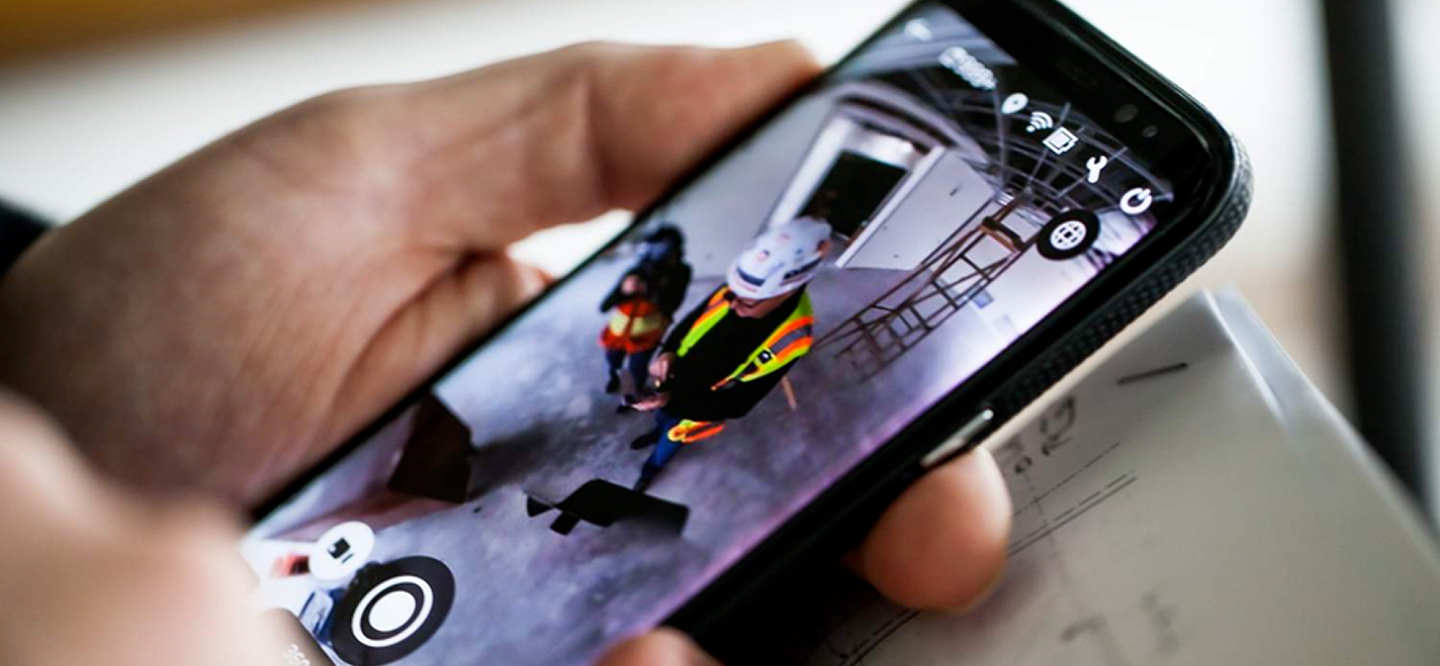
There’s no single best 360 camera for construction sites; the best camera for you will depend on your organization’s unique needs and priorities. Cost and photo quality are perhaps the two most obvious considerations, but you’ll also want to compare capture speed, ease of use, battery life, lighting capabilities, and integrations.
CAMERA CONSIDERATIONS
There’s no single best 360 camera for construction sites; the best priorities for your unique needs and use case.
Capture speed
Especially if you need to capture lots of photos each day.
Ease of use
Not everyone on your faster experience moving so photography experience and intuitive controls can save user time.
Battery life
On site power may be limited and you don’t want to run out of battery during a long day.
Lighting capabilities
In many cases lighting will be low, but you’ll want to have special 360 modes to automatically compensate.
360° Integrations
To seamlessly integrate with corporate 360 images like image editing software, or other tools.
When it comes to 360 photography on a construction site, there are two main options to consider: handling the photography process in-house or hiring a professional team to manage it.
Ultimately, the decision between managing 360 photography in-house or hiring a third-party team will depend on your budget constraints, available resources within your organization, desired level of control over the process, and project requirements. Assessing these factors will help you make an informed decision that aligns with your specific needs.

To keep everything in-house, you’ll need to invest in the necessary equipment and provide sufficient training to prepare your existing employees to take on 360 photo capture. With this approach, you’re in total control of your workflow, but you also have total responsibility over the capture process, QA (Quality Assurance), photo storage, and photo access — which means you’re taking on more risk.
It’s also important to consider the labor, training, and equipment costs associated with this option. Training employees will require time and resources, especially if they are not familiar with 360 photography techniques. Additionally, purchasing high-quality equipment can be a significant upfront investment, and if the equipment breaks, you’ll be left without photo documentation until it’s fixed.

Outsourcing to an experienced third-party team can take the photo documentation burden off your shoulders. A professional 360 photo provider will know how to capture optimal shots for your needs and will handle the entire workflow, from capture to QA to photo storage and access. This saves time for your in-house team to focus on other vital work.
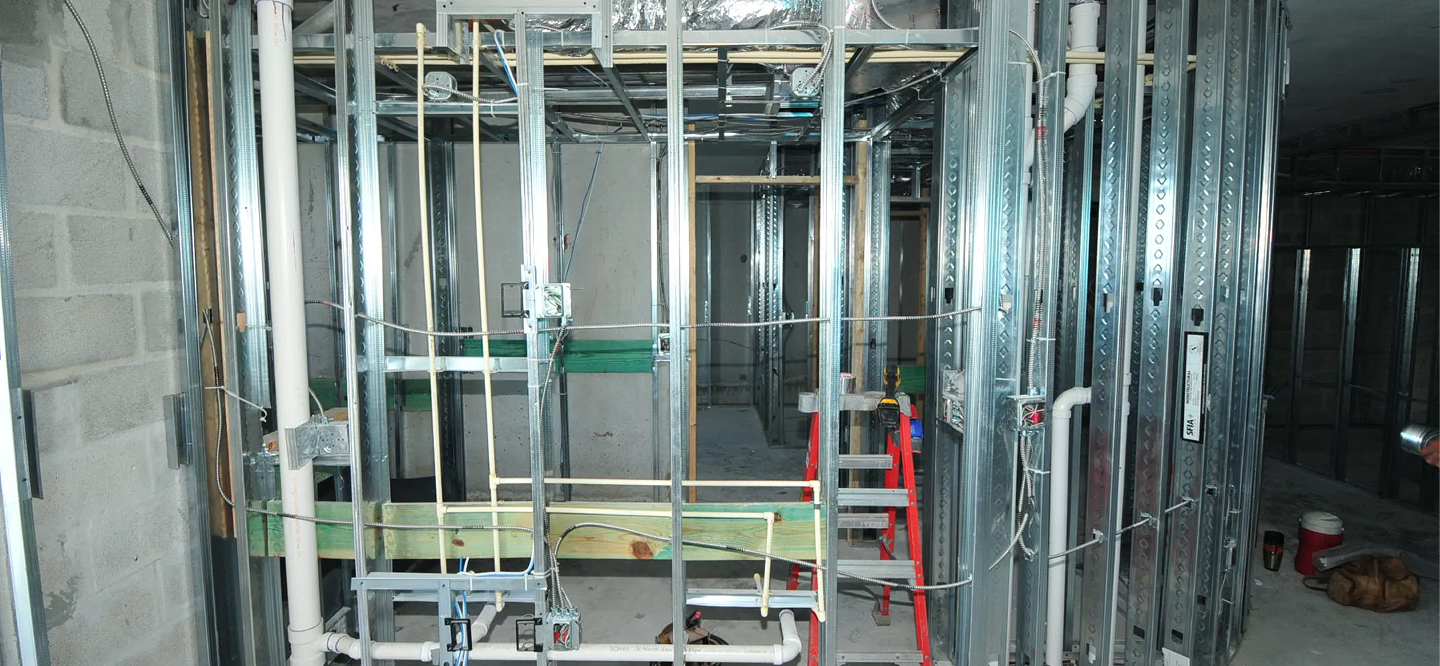





While using 360‑degree cameras for construction documentation comes with numerous benefits, there are also a few common challenges.
With 360 photos, it can be challenging to keep the photographer out of the images. Luckily, many cameras now come equipped with remote shutters or timers that allow photographers to either step out of the frame or crouch below the monopod before capturing the image. Multivista Documentation Specialists take the latter approach.
360 photos generally don’t allow you to zoom in on distant objects in high definition. While 360 photos provide an immersive and panoramic view, they usually can’t capture fine details of objects that are far away. One way to address this challenge is to take supplemental photos with a traditional close-up camera in areas where you might need to view details close up.
Getting started with 360 photography can be daunting at first. The specialized equipment, skills, and software required may seem overwhelming, and that prevents many companies from moving forward with this helpful technology. However, working with a professional provider who specializes in construction photography can help alleviate these challenges and ensure you get good results.



As with many other construction technologies, the future of 360 photo documentation is intertwined with artificial intelligence (AI).
As AI technology continues to advance, it will become faster and easier to extract insights from 360 photo documentation and use them to improve quality assurance and enhance project management processes. By leveraging machine learning algorithms to process 360 photos, AI can also identify and flag potential issues or discrepancies in construction projects. This automated analysis will not only save time but also improve accuracy and prevent costly rework.
Furthermore, 360 photos will increasingly be integrated into other documentation workflows, such as 3D laser scanning. Combining these technologies allows for a more holistic approach to capturing project data, resulting in more accurate documentation and more streamlined workflows.
As the global leader in construction documentation, Multivista will give you the insights you need to better manage your projects.
With our 360 Photo services, project teams can update schedules, demonstrate progress to stakeholders, resolve RFIs and change orders, manage disputes, and get paid faster.
Here’s how it works:
Your local Multivista team will work with you to create a schedule of progress shoots at a cadence that works for you.
Multivista Documentation Specialists use HDR-enabled 360 cameras to capture comprehensive interior and exterior views of your entire job site.
Project photos and interactive floor plans are made available to project stakeholders and partners via Multivista’s cloud-based platform. Photos can also be shared to your preferred third-party project management software.
Your project teams leverage the photos to make informed decisions and streamline processes.